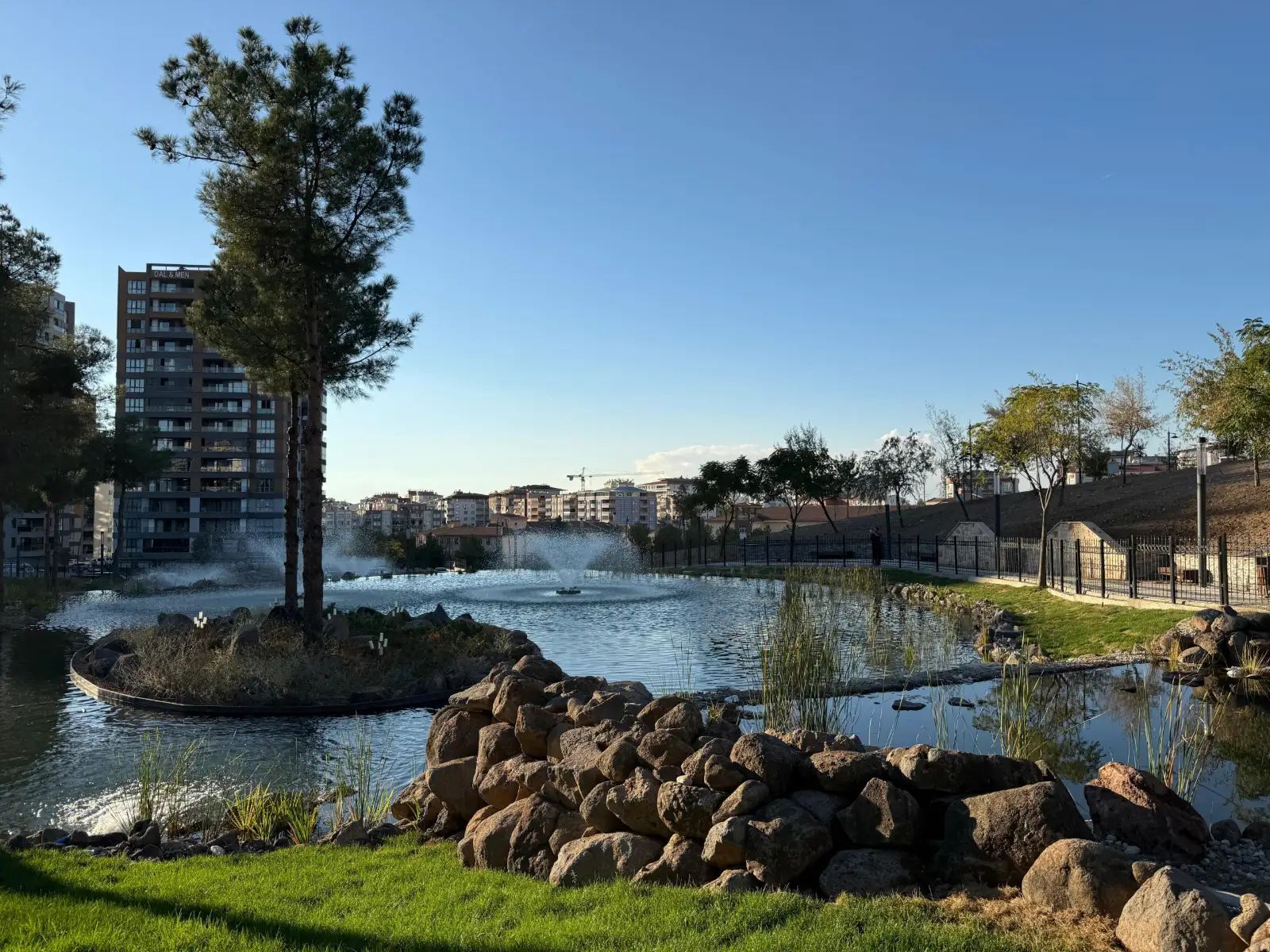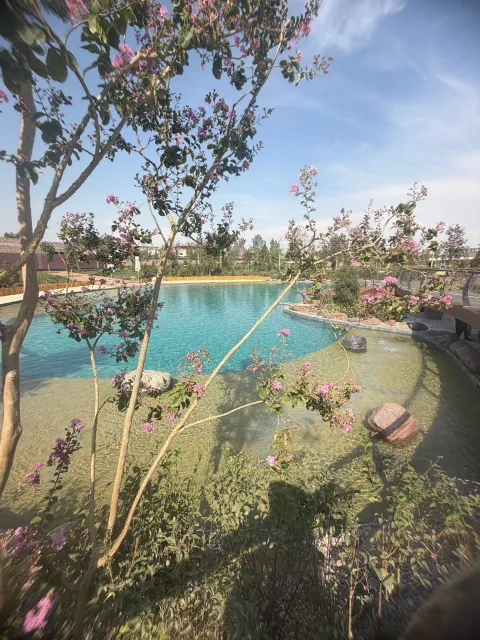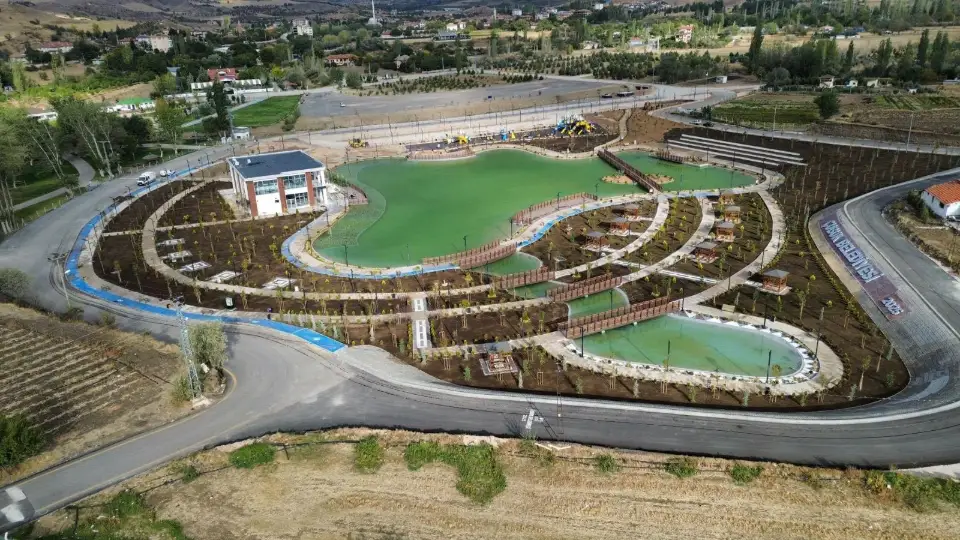
Pond waterproofing prevents water from seeping into the ground from earth or concrete water-retaining structures. Agricultural irrigation ponds, landscape and ornamental ponds, fire and drinking water tanks, stormwater and wastewater basins and water channels all fall into this category.
AquaSeal mostly uses HDPE geomembrane for pond lining and, depending on shape and purpose, provides EPDM, PVC or liquid solutions. We handle ground preparation, geotextile protection, welding and weld testing in-house.
Why does a pond need a liner?
A pond built on low-clay soil can lose much of its water shortly after filling. Seepage is not only wasted resource — it can cause slope failure, wet surrounding land and reinforcement corrosion in concrete structures.
Geomembrane lining is the most economical and fastest way to seal earth ponds. A membrane of the right thickness, protected by geotextile and with tested welds, resists roots, stones and UV for many years.
Pond waterproofing: where we apply it
- Agricultural irrigation ponds
- Landscape, ornamental and natural swimming ponds
- Concrete water and fire tanks
- Rainwater harvesting and wastewater basins
- Irrigation and drainage channels
- Fish farming ponds and recreational water
Systems we use
- HDPE geomembrane
- High-density polyethylene with excellent chemical, UV and root resistance, joined by extrusion and dual-track hot wedge welding on large ponds.
- EPDM and PVC membranes
- Highly flexible, preferred for ornamental ponds with complex shapes and natural swimming areas.
- Geotextile protection
- A protective fleece beneath, and where needed above, the membrane against stones and roots.
- Systems for concrete water structures
- Potable-water approved cementitious and crystalline waterproofing with detail tapes for tanks.
Pond waterproofing: application stages
Site and ground survey
Volume, slope angles, soil, groundwater and inlet/outlet structures are assessed.
Material and thickness
Membrane type and thickness, geotextile weight and anchor detail are chosen for the intended use.
Ground preparation
Roots, stones and sharp objects are removed; the ground is compacted and graded and an anchor trench is dug at the crest.
Geotextile and membrane
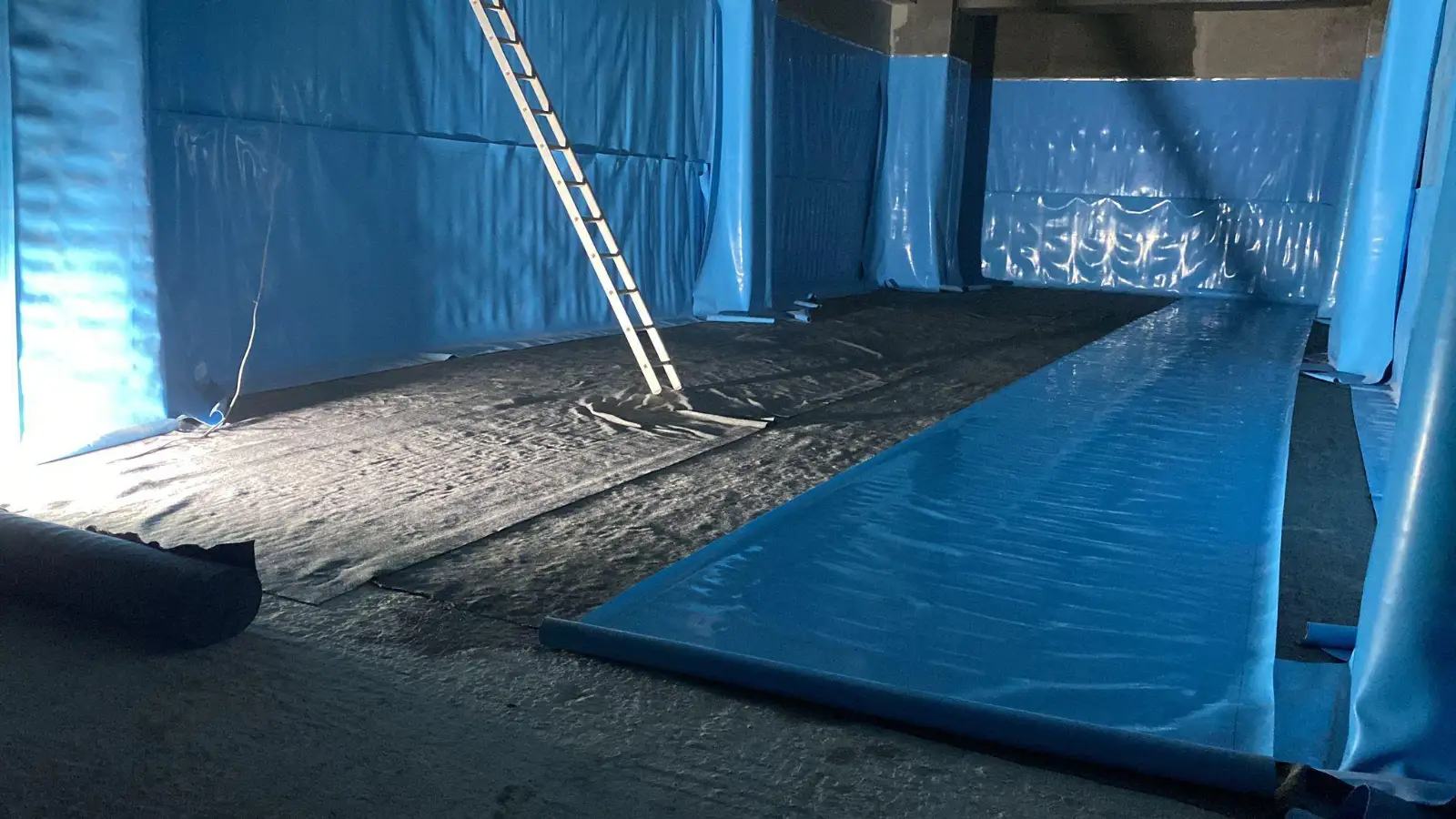
Geotextile is laid, then membrane rolls are placed with overlaps and welded.
Weld testing
Air pressure tests on dual-track welds and vacuum or spark tests on extrusion welds confirm watertightness.
Anchoring, penetrations and handover
The membrane is secured in the anchor trench, pipes are sealed with collars and the pond is filled under control.
Pond waterproofing: key benefits
Stops water loss
Preserves irrigation and storage capacity by preventing seepage.
Economical
Far less costly than a concrete structure for earth ponds.
Fast installation
Large areas can be lined in a short time.
Environmentally sound
Prevents ground and groundwater contamination; suitable products are approved for potable water.
Tested welds
Every weld line is tested and recorded.
Pond waterproofing: frequently asked questions
How is a pond lined?
The ground is cleared and graded, geotextile is laid, HDPE or another suitable geomembrane is placed with overlaps and welded, and the welds are tested. The membrane is anchored in a trench at the crest and the pond is filled.
What geomembrane thickness does a pond need?
It depends on size, water depth, ground conditions and whether the liner will be exposed. Irrigation ponds commonly use HDPE in the 1–2 mm range; we specify after the survey.
How long does HDPE geomembrane last?
With its high UV and chemical resistance it serves for many years when protected correctly. Service life depends on thickness, sun exposure and mechanical impact.
Can an existing leaking pond be lined?
Yes. The pond is drained, the ground re-prepared and a membrane installed. Tears in an existing membrane can also be repaired by welding on site.
What is used for water tanks?
Concrete drinking water tanks use cementitious or crystalline systems certified for potable water contact, with corners and penetrations reinforced by tape.
How is the cost of pond lining calculated?
By total lined area including floor and slopes, membrane type and thickness, geotextile requirement and site access.