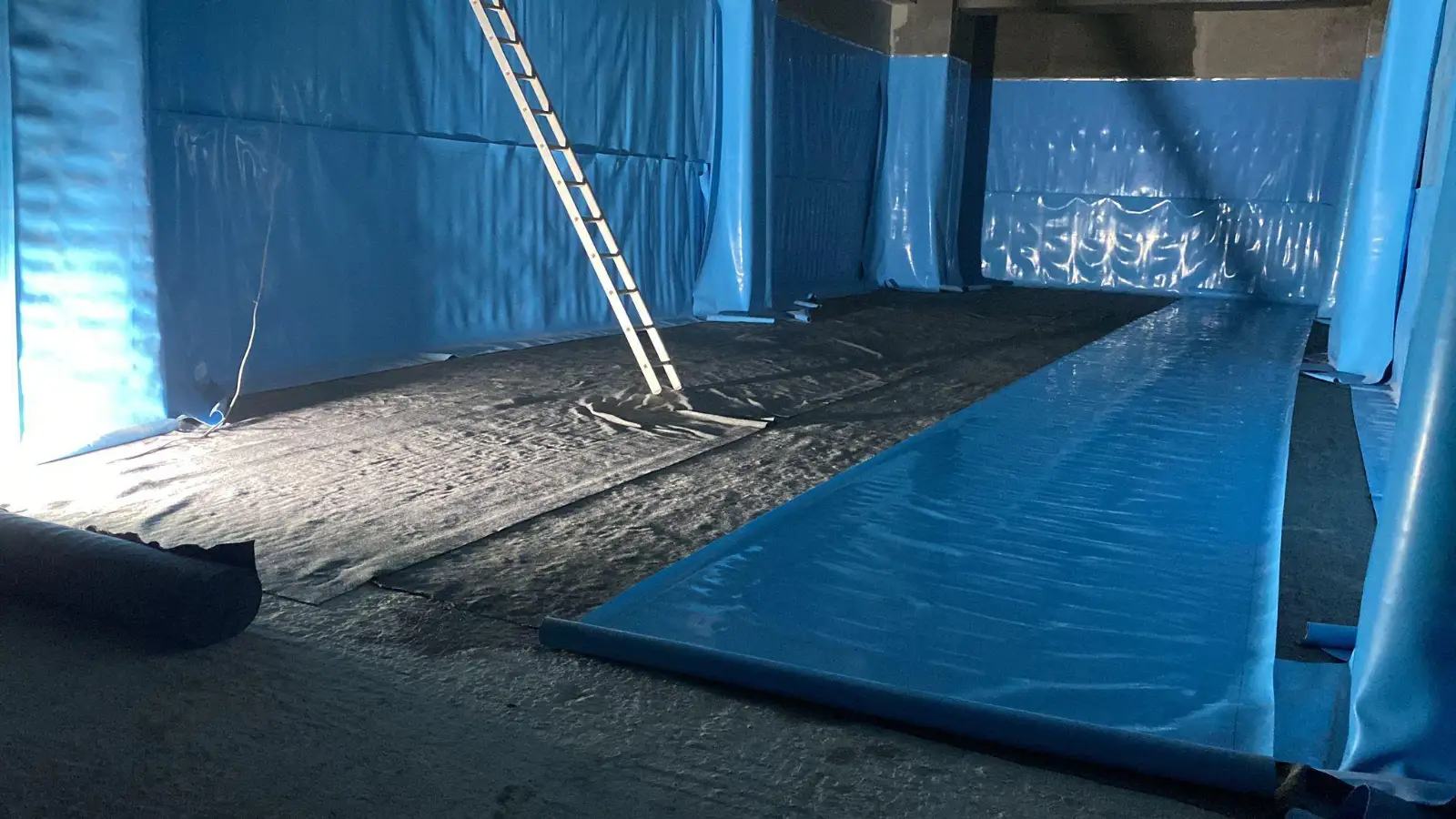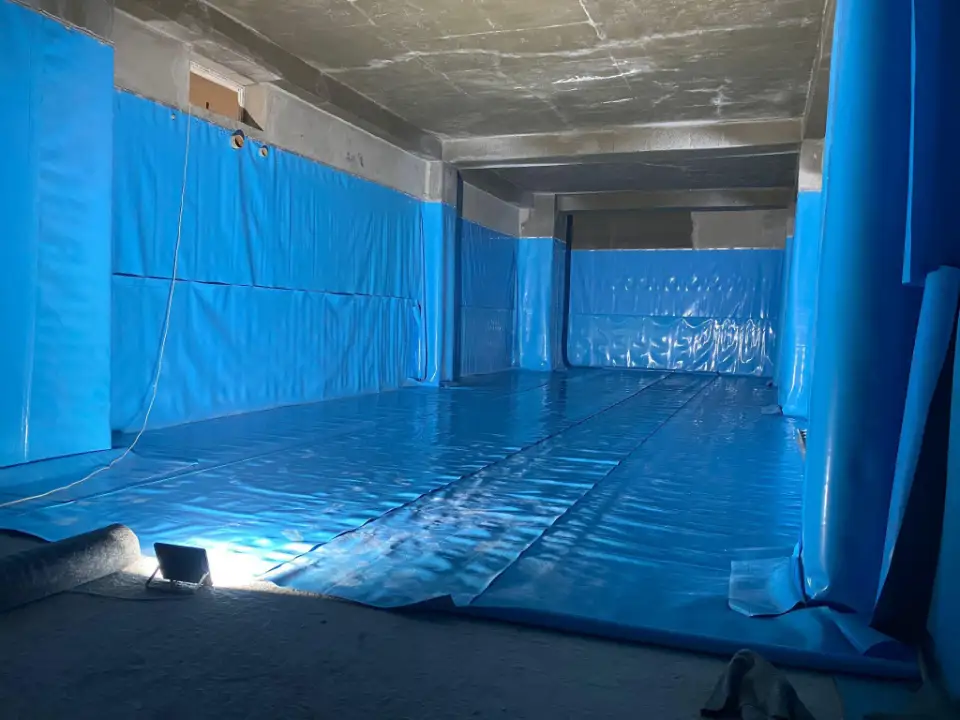
Waterproofing covers every system that protects a structure from rainwater, groundwater, ground moisture and service water. In pools, ponds and water tanks the goal is the opposite: keeping water in and stopping leaks from outside. In both cases AquaSeal studies the surface, the water pressure and the conditions of use, then builds a waterproofing system designed for that project.
For foundations, retaining walls, basements, terraces, balconies, roofs, wet areas and water structures we select the most suitable solution from bituminous membranes, synthetic membranes, liquid membranes, cementitious and crystalline products, and deliver the work from survey to final inspection with a single team.
What is waterproofing and why does it matter?
Reinforced concrete may look watertight, but concrete is porous. Water travelling through capillaries eventually reaches the reinforcement, corrodes the steel, and the expanding rust cracks the concrete. The result is loss of structural capacity, flaking plaster and paint, mould, damp smells and high repair bills.
In an earthquake-prone country, protecting the structural frame is directly a matter of safety. Waterproofing is a small share of construction cost, while repairing the damage caused by neglecting it costs many times more. It can be added later, but the most economical and robust solution is a system planned during construction.
Waterproofing: where we apply it
- Below-slab, foundation and retaining walls (full tanking)
- Basements, car parks and lift pits
- Flat roofs, terraces and balconies
- Bathrooms, kitchens and wet areas
- Swimming pools, ornamental pools and water tanks
- Ponds, channels and water structures
- Podium decks and landscaped slabs
- Industrial roofs and floors
Systems we use
- Bituminous membranes
- SBS or APP modified membranes with polyester carriers, torch-applied fully bonded or loose laid on foundations, walls and roofs.
- Synthetic membranes (PVC, TPO, EPDM, HDPE)
- Durable, flexible sheets joined by hot-air welding, ideal for large roofs, ponds and water structures.
- Liquid membranes
- Polyurethane, polyurea and acrylic coatings, brushed or sprayed into a seamless layer — a major advantage on surfaces with many details.
- Cementitious and crystalline waterproofing
- Flexible cementitious coatings for pools, tanks and wet areas; crystalline systems that seal concrete capillaries against negative water pressure.
- Ancillary products
- Waterstop tapes, construction joint profiles, drainage boards, protection fleeces and insulation boards reinforce the weak points of the system.
Waterproofing: application stages
Survey and diagnosis
We inspect the building on site and record the water source, the pressure direction (positive or negative), the substrate condition and any existing damage.
System selection and design
We choose the material, layer build-up and detail solutions for the conditions of use and provide a written quotation with quantities and a schedule.
Surface preparation
Loose material, oil and dust are removed; cracks and tie holes are repaired, corners are chamfered and a suitable primer is applied.
Detail reinforcement
Pipe penetrations, drains, movement joints and corners — the first places water finds — are reinforced with tapes and extra layers.
Main waterproofing layer
The selected system is applied at the thickness, overlap and number of coats specified by the manufacturer, with every stage documented by photos.
Protection and inspection
The waterproofing is covered by a protection layer, flood-tested where appropriate and handed over with an application report.
Waterproofing: key benefits
Protects the structure
Prevents reinforcement corrosion, preserving the life and seismic performance of the frame.
Healthy interiors
A lasting answer to damp, mould and musty smells.
Lower maintenance cost
Far more economical than later repairs and protects property value.
Energy efficiency
Wet insulation loses its effect; dry insulation keeps heat loss down.
A system for your project
Chosen for the substrate and water pressure rather than a one-size-fits-all product.
Waterproofing: frequently asked questions
How is waterproofing applied?
First the water source and pressure direction are identified. The surface is then prepared, critical details are reinforced and the chosen system (membrane, liquid or cementitious) is applied at the specified thickness. Finally the layer is protected and, where possible, flood-tested.
Which waterproofing material is best?
There is no single best material. Bituminous membranes suit foundations, liquid polyurethane suits terraces, flexible cementitious coatings suit pools and HDPE geomembranes suit ponds. The right choice depends on substrate, water pressure, UV exposure and use.
What determines the cost of waterproofing?
Area, chosen system, surface preparation needs, number of details and access conditions. After the survey we provide an itemised written quotation.
Can an existing building be waterproofed?
Yes. We use crystalline systems or injection from the inside in basements, and liquid membranes that can be applied without demolition on roofs and terraces.
How long does waterproofing last?
It depends on system quality, workmanship and whether the layer is protected. Properly detailed and protected systems perform for many years, and regular inspection extends their life.
Which regions do you serve?
We work throughout Turkey and abroad, planning survey and installation logistics according to the size and location of the project.