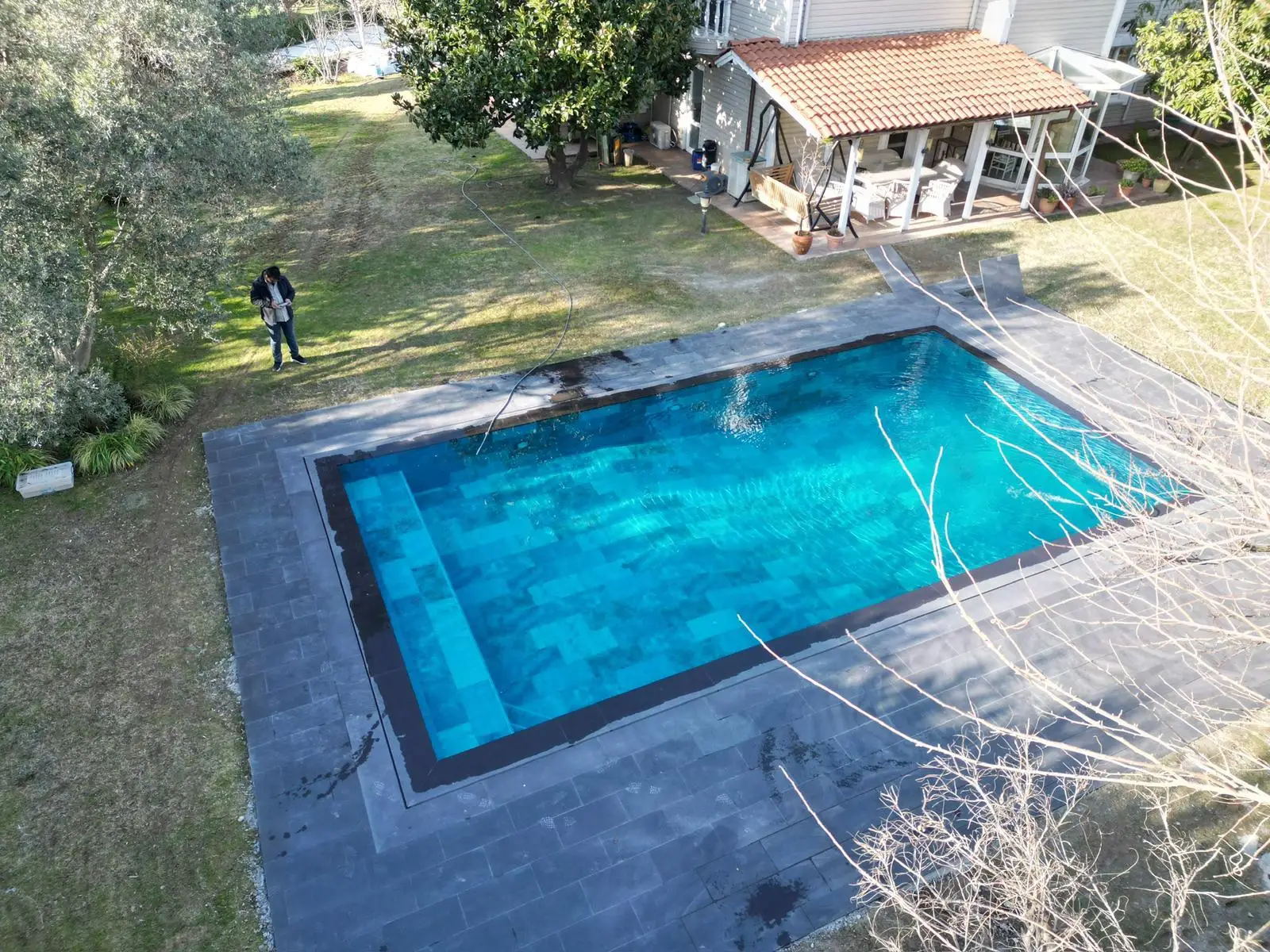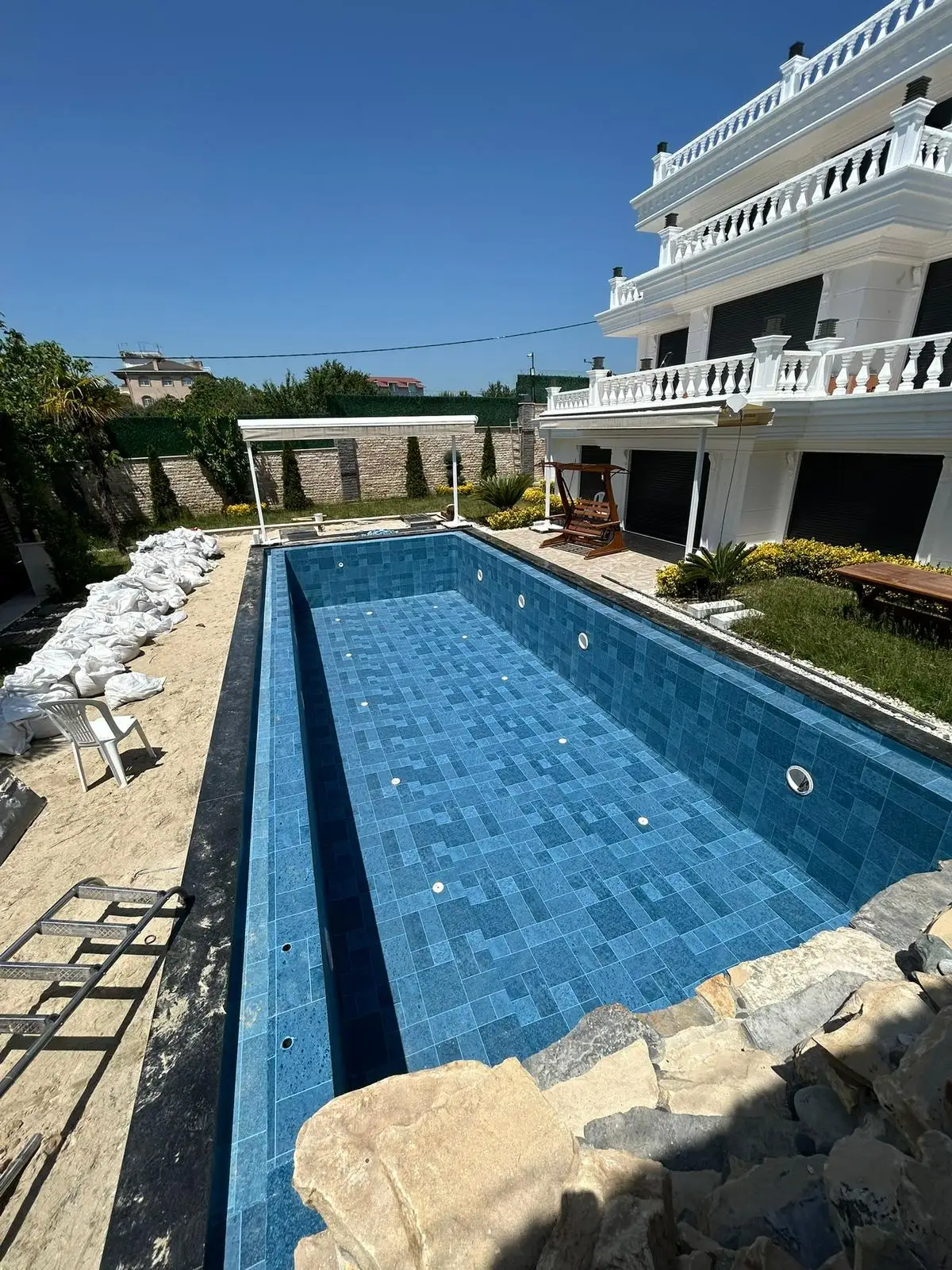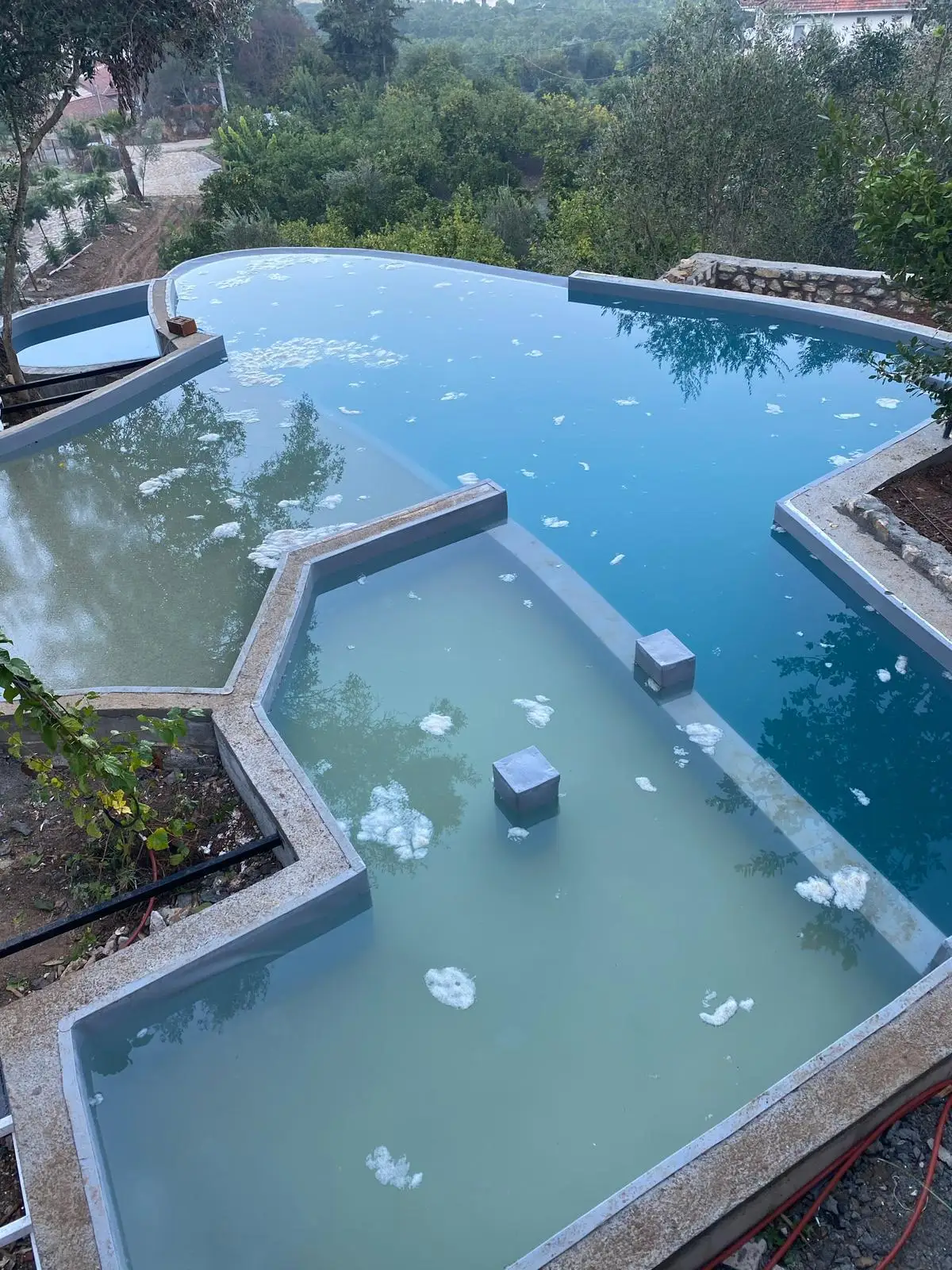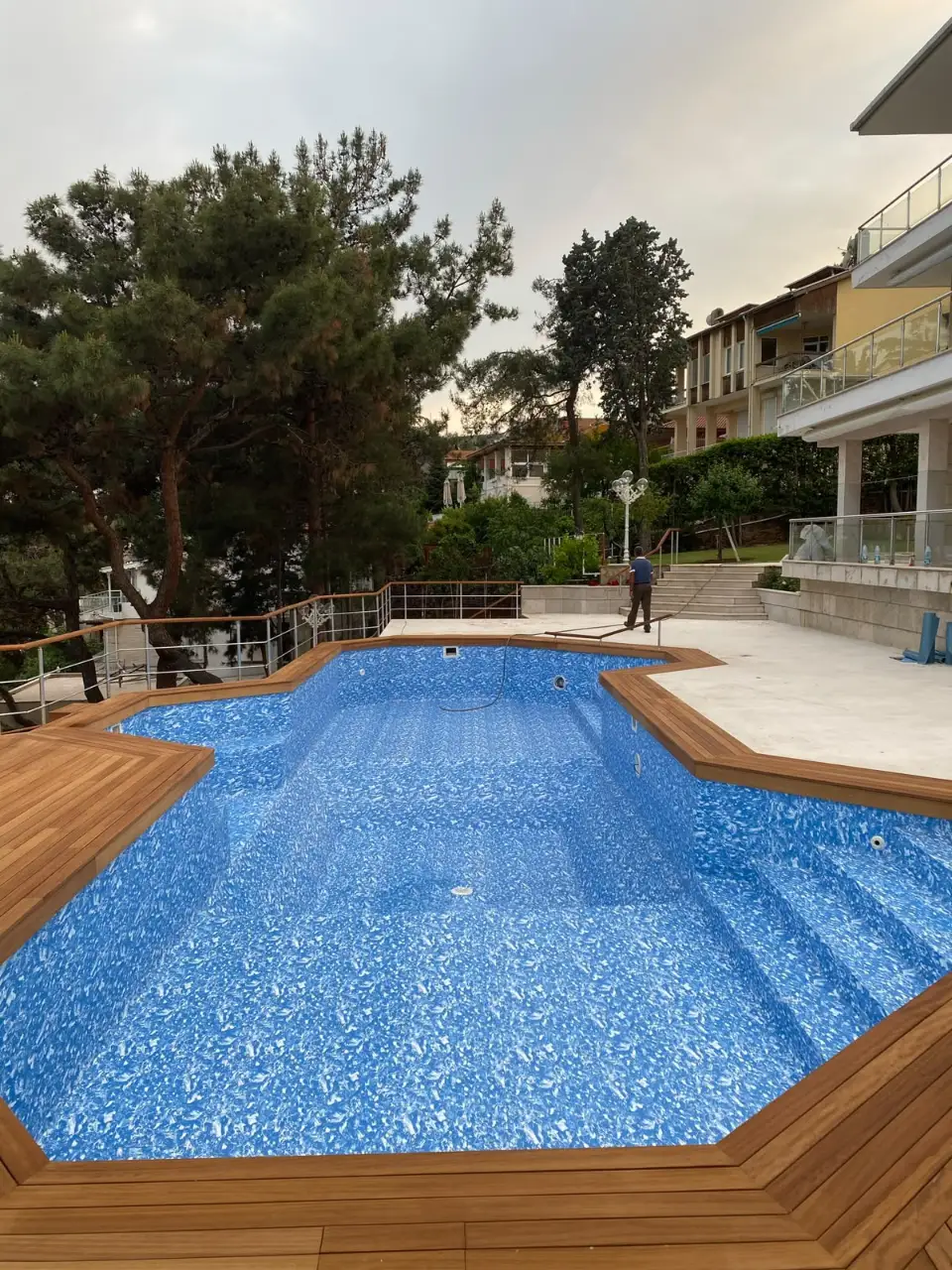
Pool waterproofing keeps water inside the reinforced concrete shell and protects it from groundwater outside. However good the tiles are, without proper waterproofing behind them water passes through the joints into the concrete, leading to reinforcement corrosion, water loss and loose tiles.
AquaSeal manages the whole process for villa, residential, hotel and sports pools, from surface preparation to the flood test. Skimmers, inlets, lights and pipe penetrations — the points that leak most often — receive dedicated detailing.
Why does pool waterproofing matter so much?
Pool water exerts constant pressure and contains chemicals such as chlorine and salt. Concrete alone is not watertight under these conditions; construction joints, tie holes and shrinkage cracks are the easiest paths for water. Left untreated, they cause water loss, wet surroundings and structural damage.
Pool waterproofing must also work in reverse: where groundwater is high, external pressure can lift the finish when the pool is drained. We therefore assess location, groundwater and use together.
Pool waterproofing: where we apply it
- Villa and private pools
- Hotel, resort and residential complex pools
- Olympic and semi-olympic sports pools
- Infinity pools and balance tanks
- Children's pools, hot tubs and spa pools
- Ornamental pools and water features
Systems we use
- Flexible cementitious waterproofing
- Two-component, crack-bridging coatings — the most widely used pool system under tiles and mosaics.
- Crystalline waterproofing
- Forms crystals in the concrete capillaries to stop water within the concrete, effective against negative pressure.
- Polyurethane and epoxy systems
- For pools that need high flexibility or chemical resistance, or that will not be tiled.
- Waterstop tapes and detail products
- Tapes, collars and elastic sealants on corners, construction joints and every penetration.
Pool waterproofing: application stages
Pool survey
Concrete quality, joints, penetrations, groundwater and any leak history are assessed.
Surface preparation
The surface is blast-cleaned or ground; tie holes and honeycombing are filled with repair mortar.
Corners and penetrations
Wall-to-floor junctions are chamfered; tapes and collars are installed on all corners and penetrations.
Waterproofing layers
The system is applied in at least two coats in crossing directions at the specified thickness, respecting curing times.
Flood test
After curing the pool is filled and the water level monitored; tiling starts only once no loss is confirmed.
Ready for finishing
The pool is handed over with a test report to the tiling team, with the waterproofing protected.
Pool waterproofing: key benefits
Stops water and chemical loss
Prevents waste of water, heat and pool chemicals.
Longer-lasting finishes
Tiles and grout that stay dry from behind do not loosen or stain.
Protects the structure
Prevents reinforcement corrosion and ground settlement.
Tested result
A flood test before tiling catches problems while they are cheap to fix.
Flexible solution
Suitable for new pools and existing pools after the finish is removed.
Pool waterproofing: frequently asked questions
How is a swimming pool waterproofed?
The surface is cleaned and repaired, tapes are installed on corners and penetrations, and a flexible cementitious or other suitable system is applied in at least two coats. After curing the pool is flood-tested before tiling.
Which material should be used?
Two-component flexible cementitious products are most common under tiles or mosaics. Crystalline, polyurethane or epoxy systems are added for groundwater, chemical exposure or untiled pools.
My pool is losing water — can it be fixed?
Yes. A level test and inspection first show whether the loss is structural or from the plumbing. Structural leaks are treated with local injection or by removing the finish and re-waterproofing.
How long does the flood test take?
Once the materials have cured, the pool is filled and the level monitored for several days, allowing for evaporation, to confirm there is no loss.
When should a pool be waterproofed?
After the concrete has cured and before tiling. Because it cannot be done after tiling, it should be planned during construction.
What affects the cost?
Surface area, depth, overflow channels and balance tanks, number of penetrations and the chosen system. We provide a written quotation after the survey.