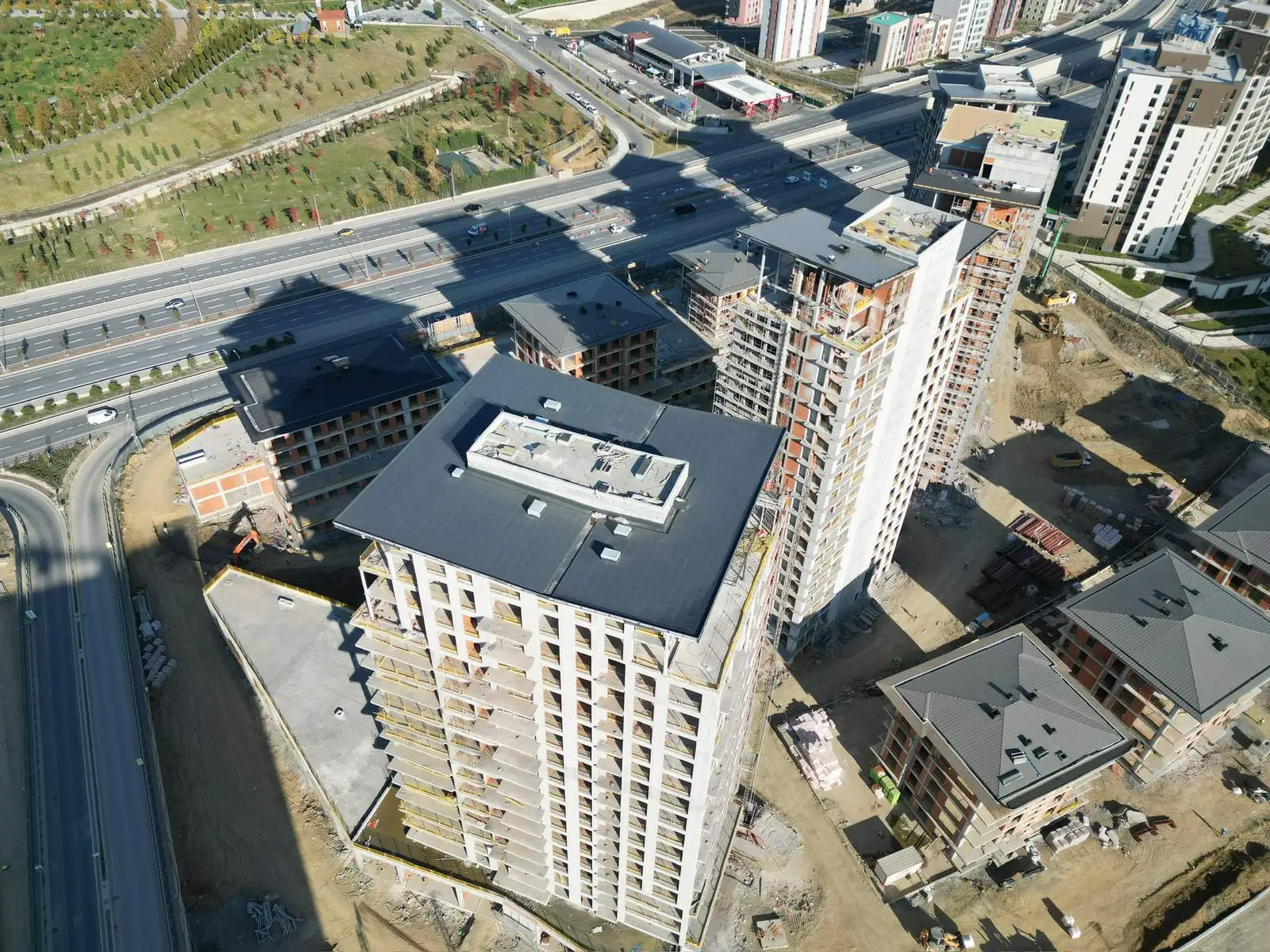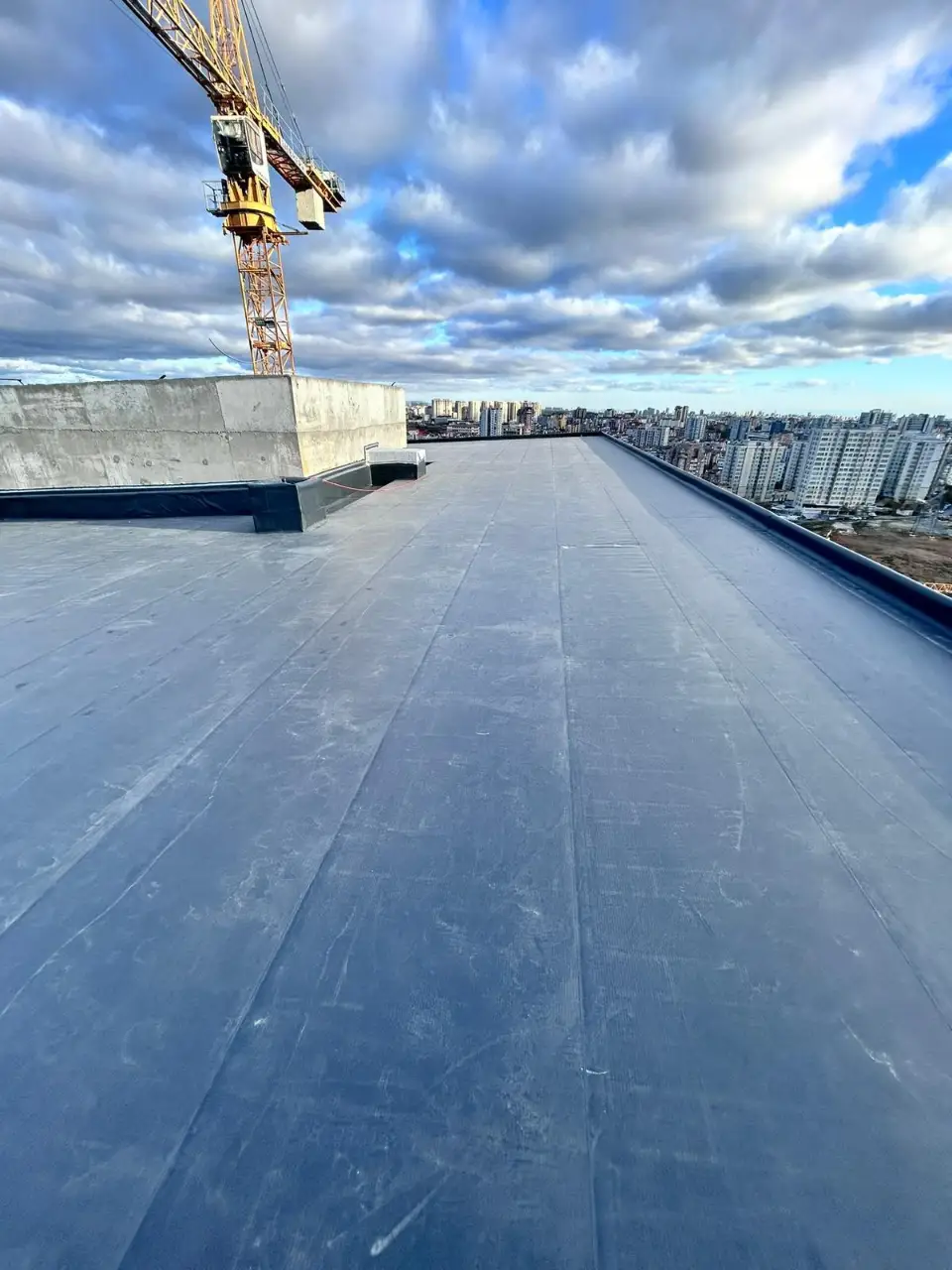
Roof insulation is the complete build-up that protects the top of a building from rainfall, snow load, UV radiation and seasonal temperature changes. A well-designed roof prevents leaks and reduces both winter heat loss and summer overheating.
AquaSeal installs bituminous, synthetic and liquid membranes on flat concrete roofs, breathable underlays and thermal insulation under tiles on pitched roofs, and seam and fixing solutions on metal and sandwich panel roofs. Every roof is assessed together with its falls, outlets and parapet details.
What is roof waterproofing and why is it important?
By the time a roof leak is noticed, it has usually already caused damage: ceiling stains, blistering paint, rotting timber and wet insulation that no longer works. The point where water appears is often far from where it enters, so accurate diagnosis is half of any roof repair.
Waterproofing and thermal insulation are linked on a roof. Once insulation gets wet its performance drops quickly and condensation and mould follow. That is why we design the vapour control, insulation and waterproofing layers together.
Roof waterproofing: where we apply it
- Flat concrete roofs and non-trafficked terraces
- Underlays and insulation for pitched tiled roofs
- Metal and sandwich panel roofs
- Green roofs and planted terraces
- Gutters, valleys and parapet details
- Loft and ceiling thermal insulation
Systems we use
- Bituminous membrane systems
- Two layers of SBS/APP membrane laid crosswise with at least 10 cm overlaps, finished with a mineral-surfaced cap sheet for UV protection.
- Synthetic roofing membranes
- PVC, TPO and EPDM single-ply membranes, mechanically fixed or bonded, offering long life on lightweight, wide-span roofs.
- Liquid polyurethane and polyurea
- A seamless coating ideal for roofs with many details and for refurbishment without stripping the existing layer.
- Underlays and thermal insulation
- Breathable underlays, XPS or stone wool boards and vapour control layers for an energy-efficient roof.
Roof waterproofing: application stages
Roof survey
Falls, outlets, parapets, chimneys and seams are inspected; leak points and wet insulation are identified.
Build-up design
Vapour control, insulation, waterproofing and protection layers are defined according to how the roof is used.
Surface and falls
Screed falls are corrected where needed, the surface is cleaned, corners are chamfered and primer is applied.
Details
Outlets, chimneys, parapet upstands and movement joints are sealed with additional layers and preformed parts.
Main waterproofing
The membrane or liquid system is installed to the specified overlaps, number of layers and thickness.
Inspection and handover
Every seam is checked, suitable roofs are flood-tested and an application report is handed over.
Roof waterproofing: key benefits
Lasting leak protection
A system detailed down to the last outlet ends ceiling stains and interior damage.
Energy savings
Dry insulation cuts winter heat loss and summer overheating.
UV and weather resistance
Mineral-surfaced membranes and UV-stable coatings for a long service life.
Lightweight systems
Synthetic and liquid membranes add very little load to the roof.
Refurbish without demolition
Where suitable, new waterproofing can be applied over the existing finish.
Roof waterproofing: frequently asked questions
How is roof waterproofing done?
The roof is surveyed, the right build-up is chosen, the surface and falls are prepared, critical details are reinforced and the membrane or liquid system is applied. Work finishes with seam checks and, where possible, a flood test.
Membrane or liquid waterproofing?
Membranes are economical and durable on large, simple roofs. Seamless liquid systems are often better on roofs with many penetrations or for refurbishment. We recommend after the survey.
When is the best season for roof work?
Dry, mild weather. Bituminous and liquid systems are not applied in rain; in emergencies we install temporary protection and wait for suitable conditions.
How is a tiled roof waterproofed?
Tiles are lifted, a breathable underlay and insulation are installed, and the tiles are relaid. Broken tiles and ridge details are renewed at the same time.
How do you find where a roof leaks?
Visual inspection, moisture measurement and controlled water testing locate the entry point, which is often several metres from where the leak appears.
Does a roof need maintenance after waterproofing?
An annual check, especially in autumn, with outlet and gutter cleaning significantly extends the life of the system.